






What are psychics like?
Route 55e The International Aeronautics and Space Show will bring together nearly 2,300 exhibitors from around fifty countries, covering an exhibition area of 125,000 m². The show will take place from June 16 to 22, with professional days from June 16 to 19, followed by the public weekend from June 20 to 22.

This new edition promises to be rich in content and highlights. Two emblematic spaces will embody the technological momentum of the show: the Paris Air Lab, dedicated to innovations – artificial intelligence, alternative propulsion, digitalization, advanced materials – and the Paris Space Hub, a new space dedicated to the entire value chain of the space sector, from institutions to startups.
Among the other structuring elements of the program: the return of the "Avion des Métiers" (Aviation Careers) and "L'Aéro Recrute" (Aero Recruits), two flagship events dedicated to training, knowledge transfer, and employment; a strong focus on diversity with the "Femmes de l'aéro et du spatial" (Women in Aerospace and Space) initiative, which will highlight inspiring career paths through testimonials, round tables, and mentoring actions; a dense program of B2B meetings and technical conferences; daily air shows; and a public weekend designed as a true celebration of aviation, blending discovery, education, and entertainment. The show will thus confirm its role as a global platform: a technological showcase, a business hub, a forum of ideas, and a place for knowledge transfer for future generations.

What is the weight of aeronautics in France's trade balance?
The aerospace industry plays a central role in the French economy, both through its contribution to growth and its impact on employment and foreign trade. Civil aviation, including aircraft manufacturing, accounts for 4.3% of the national GDP. Supported by nearly 1,000 companies, 500 of which are members of Gifas, the sector employs a highly skilled workforce—engineers, technicians, and skilled workers—and relies on a diverse ecosystem of SMEs, mid-sized companies, and startups, organized around major contractors and world-class equipment manufacturers.
The post-COVID momentum continued in 2023 and 2024, with approximately 25,000 hires per year, including 7,000 young people in apprenticeships. The sector is thus expected to return to its pre-crisis employment levels.
Commercially, the sector continues to boost France's external performance. In 2022, it generated a trade surplus of 23 billion euros, ranking first among exporting sectors, ahead of the beverage, cosmetics, and pharmaceutical industries. Although still below the record level of 2019, this performance demonstrates the sector's resilience and competitiveness in global markets. Thanks to the quality of its engineering, the robustness of its production chains, and its continuous innovation capacity, the French aeronautics industry remains a major driver of exports and technological influence on an international scale. It embodies a sector of excellence, capable of aligning industrial ambition, commercial attractiveness, and value creation.
(Source: https://www.tresor.economie.gouv.fr/Articles/2024/02/07/rapport-2024-sur-le-commerce-exterieur-de-la-france)
The Paris Air Show, known as Le Bourget for the French, is it still the place where the biggest announcements are made?
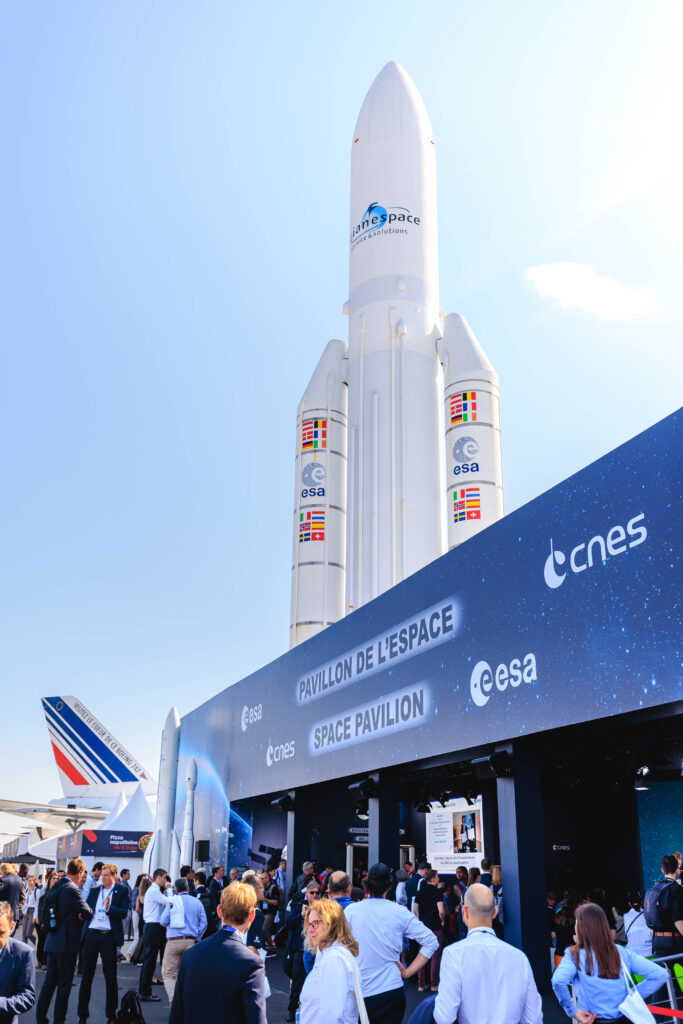
Undeniably, the Paris Air Show remains the prime venue for major announcements in aeronautics and space. It is where technological revelations, structuring program launches, and contract signings, often with significant international scope, take place. The show also represents a key moment for industrialists, who use it to present their vision, showcase their roadmaps, and engage in direct dialogue with their partners, suppliers, and customers.
The joint presence of key industry players, public decision-makers, international delegations, and specialized media gives this event a unique resonance. Le Bourget is not just a technological showcase: it is a catalyst for decisions, a place of influence, and a guide for the entire global ecosystem.
The Bourget is known for its air show. But is it a public show or a trade show? Business ?
The Paris Air Show fully embraces its dual purpose: a strategic meeting place for industry professionals, and an event for public passion and awareness.
From June 16 to 19, access is exclusively reserved for industry players: manufacturers, equipment suppliers, official delegations, investors, operators, insurers, engineers, researchers, etc. This period is designed to foster technical exchanges, networking, contract negotiations, and the presentation of the latest technological advancements in a highly professional environment.
On June 20, 21, and 22, the show enters a whole new dimension by opening its doors wide to the general public. The air show, flight demonstrations, static displays, entertainment, and career zones attract tens of thousands of visitors. This popular aspect of the show plays a vital role: it allows people to discover the inner workings of the industry, transmit scientific and technical knowledge, and inspire vocations in younger generations.
Among your exhibitors, we find several players from the measurement, inspection, and control sectors. What do these fields bring to mind for you?
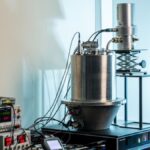
These domains are essential for ensuring safety, quality, and performance in aeronautics. Companies specializing in metrology, non-destructive testing, automated inspection, or quality control will be present at the exhibition. Their expertise contributes to the continuous improvement of industrial processes and technological innovation. The exhibition offers an ideal platform for these players to showcase their solutions and meet their partners and clients.
Is innovation still the common thread in the sector?
More than ever. Innovation remains the essential driver of the aeronautics and space industry, at the crossroads of technological, environmental, geopolitical, economic, and industrial challenges. Faced with the increasing complexity of systems, performance imperatives, and sustainability expectations, research and development efforts are intensifying.
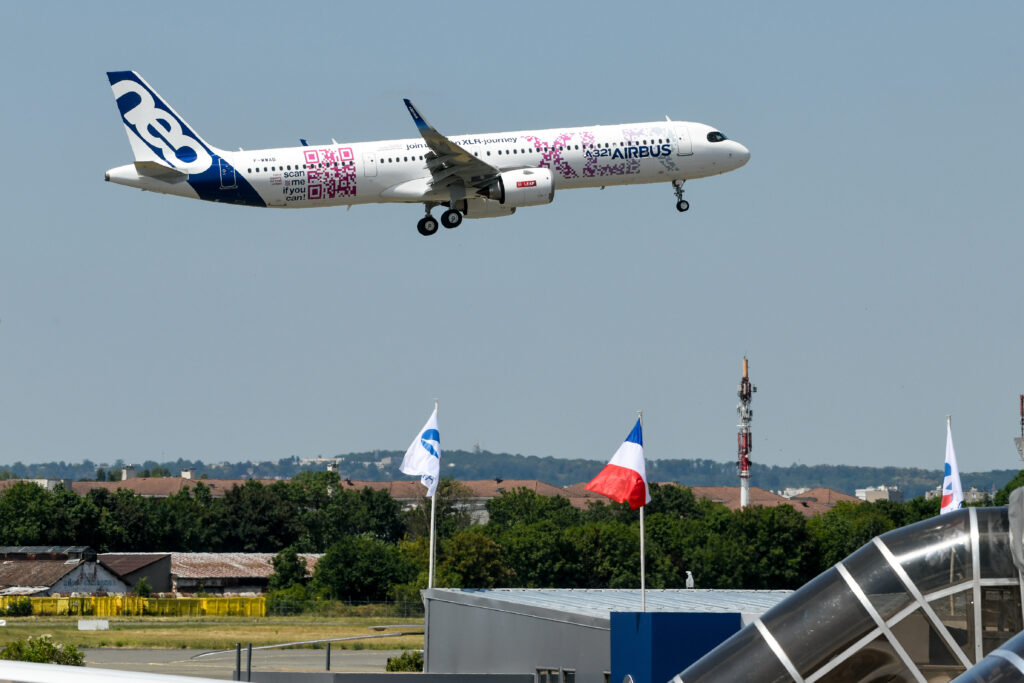
Flight demonstration of the Airbus A321 XLR presented at the 2023 edition.
Breakthroughs concern advanced materials, propulsion architectures, onboard systems, the digitalization of production chains, and the integration of artificial intelligence, including for testing, maintenance, and certification. The Paris Air Lab, at the heart of the show, illustrates this dynamic. It brings together startups, major groups, and public and private laboratories to present emerging technologies, test demonstrators, and share the sector's innovation pathways.
Is the decarbonization of air transport a utopia or a catalyst for innovation?
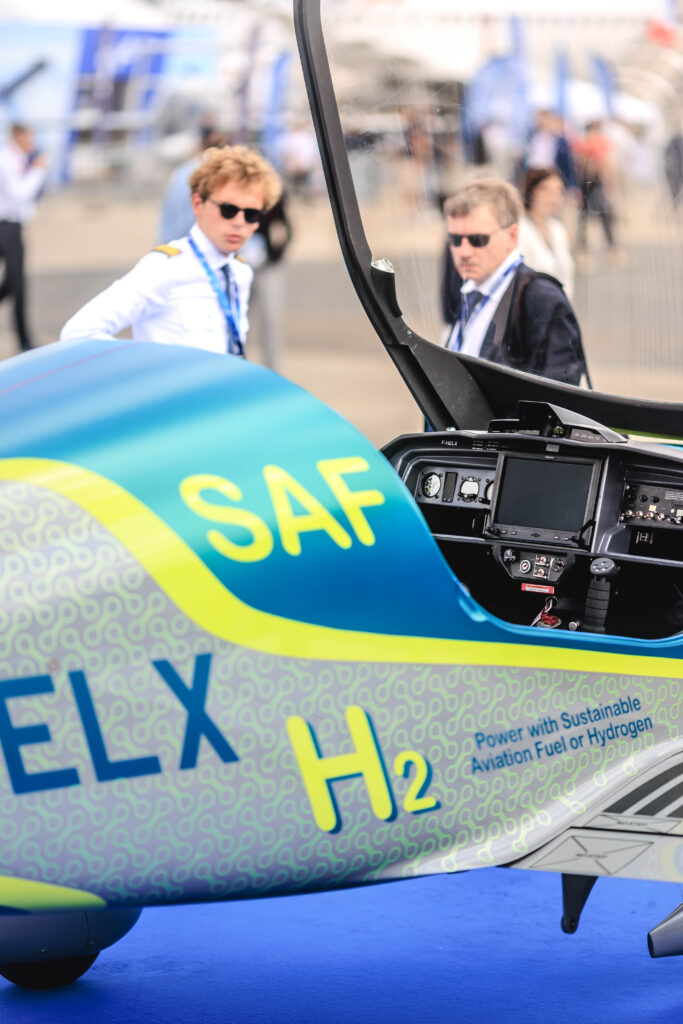
It is a lever for major transformation and a formidable accelerator of innovation. The commitment to more carbon-neutral air transport is mobilizing the entire industrial chain today, from engine manufacturers to equipment suppliers, including integrators, energy companies, and service operators.
This challenge is leading to significant technological advancements in several areas: the design of electric or hybrid-hydrogen propulsion aircraft, the development of sustainable aviation fuels (SAFs), the optimization of flight operations, the electrification of ground equipment, and more. These initiatives are part of a logic of open cooperation, involving industry players, academics, institutions, and public authorities.
The Paris Air Show 2025 will highlight these projects through its various areas, particularly within the Paris Air Lab, a true showcase of concrete solutions and current transition paths within the sector.
Interview by Nicolas Gosse